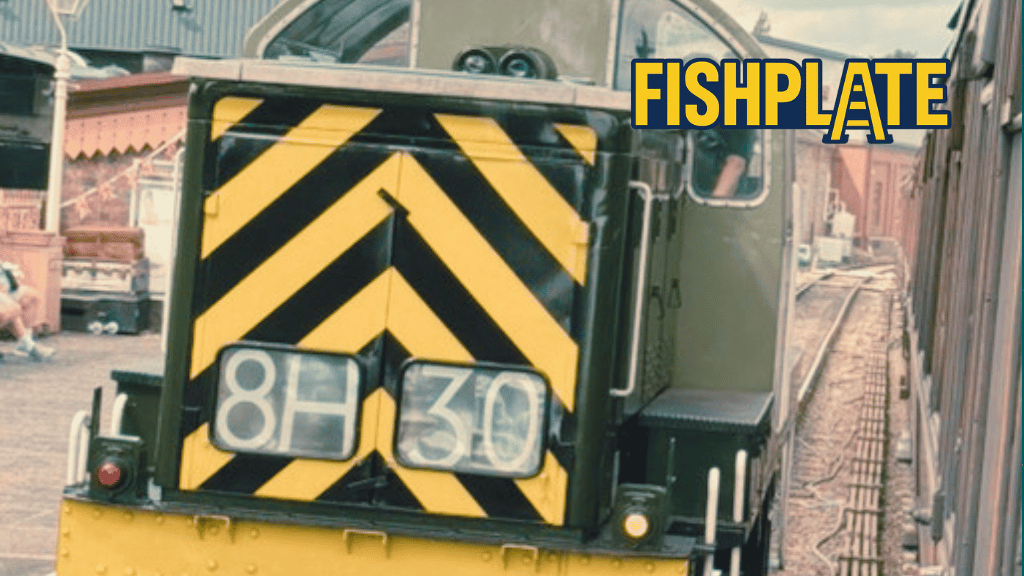
If you spend time watching railway videos or checking train movements, you will eventually come across a headcode beginning with 1Z.
For many enthusiasts, that is a reason to take a closer look.
A headcode is a four-character train reporting number. It helps identify a train service and gives a rough idea of what kind of working it is. The first character usually tells you the broad type of train. A headcode beginning with 1 normally points to an express passenger service, a higher-priority passenger working, or certain special movements.
The second character is a letter. In many ordinary headcodes, this can relate to the destination area. But Z is commonly associated with special, unusual, short-notice, or one-off workings.
Put them together, and 1Z often suggests a special passenger train.
Why 1Z headcodes are interesting
A 1Z headcode is often seen on railtours, charters, special passenger services, additional trains for major events, or other workings that do not fit neatly into the normal timetable.
That is why railway enthusiasts tend to notice them. A 1Z working might involve unusual traction, an interesting route, heritage stock, a special livery, or a train that only runs on a particular day.
Not every 1Z train is rare, and not every one will be exciting. But compared with a regular service pattern, a 1Z headcode is usually a useful clue that something different may be happening.
A few notable examples
Some 1Z headcodes are seen repeatedly in enthusiast records because they have been used on railtours or special trains.
One example is 1Z50, which appears in many railtour records and video titles. It has been used for special passenger workings including charter trains and enthusiast tours. On Fishplate, 1Z50 is a useful headcode to browse because it brings together a large set of indexed videos featuring special workings.
Another example is 1Z99. This is different from a normal railtour-style headcode. It is commonly associated with urgent or high-priority railway movements such as rescue, assistance, or breakdown-related trains. In other words, 1Z does not always mean “railtour”. The exact meaning depends on the working.
You may also see headcodes such as 1Z51 or 1Z52 used on special excursion trains. These can appear as outward and return legs of the same charter or special service, although the details depend on the day and the operator.
The important point is that a headcode is not a permanent name for a train. The same reporting number may be reused for different workings at different times. So it is always worth checking the date, route, locomotive, stock, and source.
Railtours, charters and special services
Many railtours use 1Z headcodes. These can include steam specials, diesel-hauled tours, heritage traction, private charters, or enthusiast trips over unusual routes.
A 1Z headcode may also appear for additional passenger services, special event trains, or other planned extras. The exact meaning depends on the working, the date, and the route.
This is why the headcode should be treated as a starting point rather than the whole answer. To understand the movement properly, it helps to look at the location, the visible locomotive or unit, the operator, the stock, and any other available information.
What does the “Z” mean?
In simple terms, Z is commonly associated with special or unusual workings.
That does not mean “Z” always means the same thing in every context. Railway reporting numbers can be reused, and the same headcode may appear for different trains at different times.
But as a rule of thumb for spotters, a Z in the second position is worth noticing.
For example:
- 1Z usually suggests a special passenger working;
- 0Z may suggest a light locomotive working outside the ordinary pattern;
- 5Z may suggest a special empty coaching stock move.
These are not perfect rules, but they are useful clues.
A useful clue, not a final answer
The easiest way to think about 1Z is this: it is a flag.
It does not automatically mean the train is rare. It does not prove that the working is historic. But it does suggest that the movement may sit outside ordinary passenger service patterns.
For railway enthusiasts, that makes 1Z one of the more interesting headcode combinations to recognise. It is a small code, but it often points toward a bigger story.
Popular headcodes
- 4L73 - 370 videos
- 6K73 - 283 videos
- 4L45 - 278 videos
- 6L37 - 257 videos
- 2Y35 - 209 videos
- 4L11 - 206 videos
- 6M56 - 203 videos
- 2K05 - 183 videos
- 0Z37 - 173 videos
- 4E24 - 169 videos
- 6M63 - 167 videos
- 4S43 - 166 videos
- 1Z50 - 148 videos
- 1Z40 - 137 videos
- 4S44 - 133 videos
- 1Z43 - 130 videos
- 4E21 - 127 videos
- 6J37 - 127 videos
- 6V92 - 127 videos
- 4M63 - 126 videos