- Add missing details (numbers, operators, headcodes) when they aren’t in the video
- Get recognised for contributions with points & badges
- Save favourites and come back to vehicles you’re tracking
All train classes · Diesel traction
Class 66
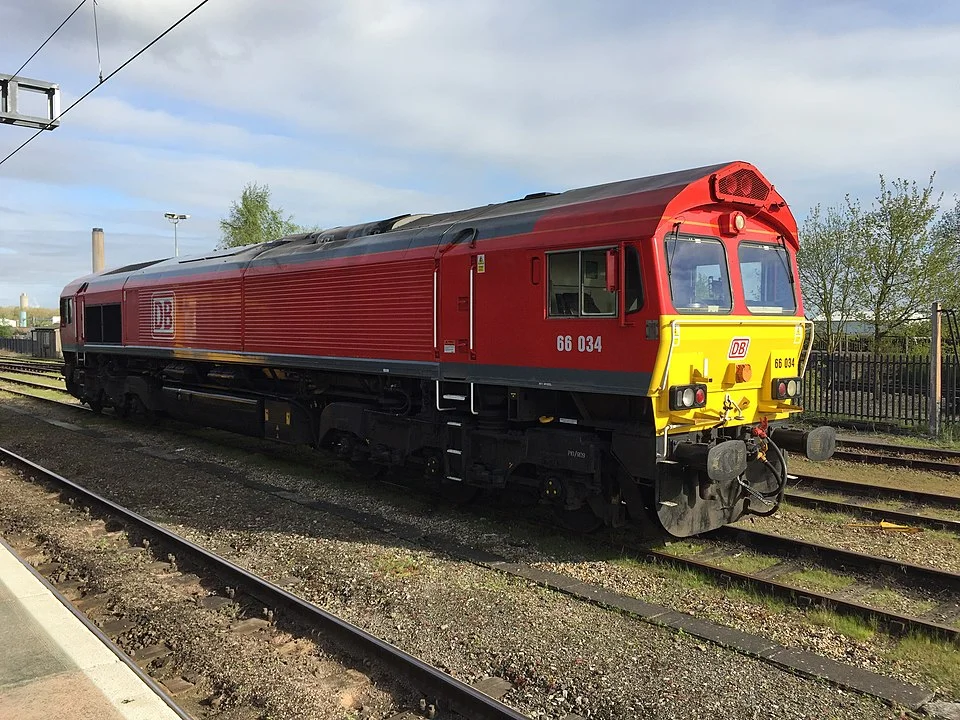
Summary
- Vehicle entries 505
- Indexed videos 19305
- Stock type Locomotive
- Power source Diesel
- Most indexed vehicle 66710 (322 appearances)
- Builder Electro-Motive Diesel
- Built 1998–2015
- Introduced 1998
- Wheel arrangement Co-Co
- Top speed 75 mph
Links


| Locomotive number | Video appearances |
|---|---|
|
66001
Dbs
|
253 |
| 66002 | 177 |
| 66003 | 156 |
|
66004
I'm A Climate Hero
|
209 |
|
66005
Maritime Intermodal One
|
176 |
| 66006 | 134 |
| 66007 | 161 |
| 66009 | 142 |
| 66010 | 104 |
| 66011 | 105 |
| 66012 | 100 |
| 66013 | 112 |
| 66014 | 109 |
| 66015 | 140 |
| 66017 | 113 |
| 66018 | 71 |
| 66019 | 128 |
| 66020 | 112 |
| 66021 | 124 |
| 66022 | 26 |
| 66023 | 115 |
| 66024 | 103 |
| 66025 | 146 |
| 66026 | 54 |
| 66027 | 104 |
| 66028 | 59 |
| 66029 | 25 |
| 66030 | 116 |
| 66031 | 145 |
| 66032 | 69 |
| 66033 | 38 |
| 66034 | 109 |
|
66035
Resourceful
|
115 |
| 66036 | 7 |
| 66037 | 49 |
| 66038 | 6 |
| 66039 | 69 |
| 66040 | 99 |
| 66041 | 123 |
| 66042 | 7 |
| 66043 | 48 |
| 66044 | 112 |
| 66045 | 23 |
| 66047 | 103 |
| 66049 | 36 |
|
66050
Yorkshire Rose
|
129 |
| 66051 | 147 |
| 66052 | 13 |
| 66053 | 77 |
| 66054 | 116 |
| 66055 | 101 |
| 66056 | 112 |
| 66057 | 123 |
| 66059 | 105 |
| 66060 | 126 |
| 66061 | 94 |
| 66062 | 15 |
| 66063 | 130 |
| 66064 | 15 |
| 66065 | 110 |
|
66066
Geoff Spencer
|
118 |
| 66067 | 125 |
| 66068 | 99 |
| 66069 | 77 |
| 66070 | 110 |
| 66071 | 21 |
| 66072 | 10 |
| 66073 | 28 |
| 66074 | 124 |
| 66075 | 114 |
| 66076 | 110 |
|
66077
Benjamin Gilbert Qc
|
133 |
| 66078 | 137 |
| 66079 | 108 |
| 66080 | 94 |
| 66082 | 79 |
| 66083 | 82 |
| 66084 | 126 |
| 66085 | 98 |
| 66086 | 72 |
| 66087 | 98 |
| 66088 | 79 |
| 66089 | 91 |
| 66090 | 130 |
|
66091
Accurascale
|
142 |
| 66092 | 97 |
| 66093 | 107 |
| 66094 | 142 |
| 66095 | 98 |
| 66096 | 129 |
| 66097 | 137 |
| 66098 | 105 |
|
66099
#We Stand With Ukraine
|
154 |
| 66100 | 140 |
| 66101 | 65 |
| 66102 | 94 |
| 66103 | 114 |
| 66104 | 117 |
| 66105 | 112 |
| 66106 | 119 |
| 66107 | 99 |
| 66108 | 133 |
| 66109 | 102 |
| 66110 | 76 |
|
66111
Dbs
|
68 |
| 66112 | 105 |
|
66113
Delivering For Our Key Workers
|
106 |
| 66114 | 110 |
| 66115 | 79 |
| 66116 | 124 |
| 66117 | 104 |
| 66118 | 93 |
| 66119 | 123 |
| 66120 | 119 |
| 66121 | 109 |
| 66122 | 143 |
| 66123 | 11 |
| 66124 | 118 |
| 66125 | 118 |
| 66126 | 124 |
| 66127 | 123 |
| 66128 | 121 |
| 66129 | 136 |
| 66130 | 94 |
| 66131 | 114 |
| 66133 | 126 |
| 66134 | 117 |
| 66135 | 87 |
| 66136 | 98 |
| 66137 | 86 |
| 66138 | 61 |
| 66139 | 97 |
| 66140 | 97 |
|
66142
Maritime Intermodal Three
|
130 |
|
66143
Dbs
|
114 |
| 66144 | 69 |
| 66145 | 44 |
| 66146 | 8 |
| 66147 | 51 |
|
66148
Maritime 7
|
108 |
|
66150
We Are The Future
|
131 |
| 66151 | 86 |
| 66152 | 151 |
| 66153 | 12 |
| 66154 | 108 |
|
66155
Jackie Cleave
|
100 |
| 66157 | 29 |
| 66158 | 98 |
| 66159 | 8 |
| 66160 | 72 |
|
66162
Maritime Intermodal Five
|
104 |
| 66163 | 10 |
| 66165 | 87 |
| 66166 | 23 |
| 66168 | 108 |
| 66169 | 97 |
| 66170 | 77 |
| 66172 | 98 |
| 66173 | 6 |
| 66174 | 116 |
| 66175 | 113 |
| 66176 | 105 |
| 66177 | 127 |
| 66178 | 9 |
| 66179 | 72 |
| 66180 | 8 |
| 66181 | 69 |
|
66182
Dbs
|
114 |
| 66185 | 112 |
| 66186 | 103 |
| 66187 | 51 |
| 66188 | 73 |
| 66189 | 7 |
|
66190
Martin House Children's Hospice
|
76 |
| 66191 | 12 |
| 66192 | 113 |
| 66193 | 22 |
| 66195 | 6 |
| 66196 | 7 |
| 66197 | 59 |
| 66198 | 98 |
| 66199 | 98 |
| 66200 | 157 |
| 66201 | 40 |
| 66202 | 13 |
| 66203 | 12 |
| 66204 | 31 |
| 66205 | 75 |
| 66206 | 112 |
| 66207 | 139 |
| 66208 | 10 |
| 66209 | 10 |
| 66210 | 13 |
| 66211 | 18 |
| 66212 | 12 |
| 66213 | 31 |
| 66214 | 11 |
| 66215 | 9 |
| 66216 | 10 |
| 66217 | 7 |
| 66218 | 10 |
| 66219 | 11 |
| 66220 | 8 |
| 66222 | 10 |
| 66223 | 3 |
| 66224 | 20 |
| 66225 | 1 |
| 66226 | 2 |
| 66227 | 5 |
| 66228 | 5 |
| 66229 | 4 |
| 66230 | 45 |
| 66231 | 13 |
| 66232 | 41 |
| 66233 | 7 |
| 66234 | 5 |
| 66235 | 5 |
| 66236 | 7 |
| 66237 | 10 |
| 66239 | 8 |
| 66240 | 4 |
| 66241 | 12 |
| 66242 | 3 |
| 66243 | 4 |
| 66244 | 68 |
| 66245 | 7 |
| 66246 | 2 |
| 66247 | 7 |
| 66248 | 4 |
| 66249 | 12 |
| 66301 | 233 |
| 66302 | 187 |
| 66303 | 179 |
| 66304 | 184 |
| 66305 | 231 |
|
66306
Scs Logistics
|
122 |
|
66307
Ipswich Town
|
157 |
|
66308
Signalman Willie Taylor
|
118 |
|
66309
Charley Wallace
|
124 |
| 66310 | 108 |
| 66311 | 85 |
|
66312
Nigel Harris
|
89 |
|
66313
Lucie
|
128 |
|
66314
Katie
|
98 |
|
66315
Lucie
|
118 |
| 66316 | 75 |
| 66411 | 23 |
| 66412 | 26 |
|
66413
Tarmac A Fox Company
|
168 |
| 66414 | 171 |
|
66415
You Are Never Alone
|
185 |
| 66416 | 153 |
| 66417 | 16 |
| 66418 | 168 |
|
66419
Lionesses Roar
|
164 |
| 66420 | 158 |
|
66421
Gresty BRidge TMD
|
212 |
| 66422 | 179 |
| 66423 | 224 |
|
66424
Driver Paul Scrivens
|
209 |
| 66425 | 214 |
| 66426 | 159 |
| 66427 | 219 |
| 66428 | 145 |
| 66429 | 189 |
| 66430 | 155 |
| 66431 | 242 |
| 66432 | 183 |
| 66433 | 187 |
| 66434 | 211 |
|
66501
Spirit Of 69
|
270 |
| 66502 | 209 |
| 66503 | 112 |
| 66504 | 156 |
| 66505 | 197 |
|
66506
Crewe Regeneration
|
159 |
| 66507 | 193 |
|
66508
City Of Doncaster
|
179 |
|
66509
The Retirement Association
|
225 |
| 66510 | 175 |
| 66511 | 197 |
| 66512 | 121 |
| 66513 | 164 |
| 66514 | 137 |
| 66515 | 194 |
| 66516 | 166 |
| 66517 | 214 |
| 66518 | 155 |
| 66519 | 182 |
| 66520 | 205 |
|
66522
Shanks
|
193 |
| 66523 | 172 |
| 66524 | 112 |
| 66525 | 217 |
| 66526 | 81 |
| 66527 | 26 |
|
66528
Madge Elliot Mbe
|
128 |
| 66529 | 77 |
| 66530 | 38 |
| 66531 | 172 |
|
66532
P&O Nedlloyd Atlas
|
179 |
| 66533 | 189 |
| 66534 | 149 |
| 66535 | 15 |
| 66536 | 117 |
| 66537 | 150 |
| 66538 | 144 |
| 66539 | 175 |
|
66540
Ruby
|
193 |
| 66541 | 107 |
| 66542 | 168 |
| 66543 | 171 |
| 66544 | 128 |
| 66545 | 115 |
| 66546 | 140 |
| 66547 | 165 |
| 66548 | 111 |
| 66549 | 121 |
| 66550 | 154 |
| 66551 | 129 |
| 66552 | 47 |
| 66553 | 108 |
| 66554 | 139 |
| 66555 | 137 |
| 66556 | 134 |
| 66557 | 134 |
| 66558 | 184 |
| 66559 | 132 |
| 66560 | 177 |
| 66561 | 141 |
| 66562 | 150 |
| 66563 | 132 |
| 66564 | 124 |
| 66565 | 161 |
| 66566 | 172 |
| 66567 | 207 |
| 66568 | 190 |
| 66569 | 179 |
| 66570 | 168 |
| 66571 | 183 |
| 66572 | 175 |
| 66582 | 12 |
| 66583 | 21 |
| 66584 | 6 |
| 66585 | 122 |
| 66586 | 9 |
|
66587
As One We Can
|
195 |
| 66588 | 118 |
| 66589 | 126 |
| 66590 | 164 |
| 66591 | 83 |
|
66592
Johnson Stevens Agencies
|
147 |
|
66593
Mersey Multimodal Gateway
|
187 |
| 66594 | 146 |
| 66595 | 32 |
| 66596 | 176 |
| 66597 | 145 |
| 66598 | 152 |
| 66599 | 65 |
| 66601 | 165 |
| 66602 | 140 |
| 66603 | 123 |
| 66604 | 131 |
| 66605 | 150 |
| 66606 | 137 |
| 66607 | 112 |
| 66608 | 15 |
| 66609 | 22 |
| 66610 | 140 |
| 66611 | 19 |
| 66612 | 18 |
| 66613 | 117 |
| 66614 | 115 |
| 66615 | 120 |
| 66616 | 107 |
| 66617 | 121 |
| 66618 | 109 |
| 66619 | 118 |
| 66620 | 94 |
|
66621
Fl
|
112 |
| 66622 | 117 |
|
66623
Fl
|
156 |
| 66624 | 3 |
| 66625 | 9 |
| 66651 | 71 |
| 66652 | 54 |
| 66653 | 54 |
| 66654 | 61 |
| 66655 | 45 |
| 66656 | 75 |
| 66657 | 47 |
| 66658 | 64 |
| 66659 | 47 |
| 66660 | 42 |
|
66687
Annette
|
48 |
|
66689
Evening Star
|
79 |
| 66693 | 31 |
|
66694
Steve Hannam
|
46 |
| 66701 | 231 |
|
66702
Blue Lightning
|
264 |
|
66703
Doncaster Psb 1981-2002
|
243 |
|
66704
Colchester Power Signalbox
|
244 |
|
66705
Golden Jubilee
|
221 |
|
66706
Nene Valley
|
245 |
| 66707 | 250 |
| 66708 | 260 |
|
66709
Sorrento
|
242 |
|
66710
Karen Harrison
|
322 |
|
66711
Sence
|
261 |
|
66712
Peterborough Power Signalbox
|
202 |
|
66713
Forest City
|
201 |
|
66714
Cromer Lifeboat
|
157 |
|
66715
Valour
|
226 |
| 66716 | 215 |
|
66717
Good Old Boy
|
217 |
|
66718
Peter Lord Hendy Etc
|
242 |
|
66719
Michael Portillo
|
296 |
|
66720
Wascosa
|
266 |
|
66721
Harry Beck
|
255 |
|
66722
Sir Edward Watkin
|
194 |
|
66723
Chinook
|
198 |
| 66724 | 201 |
|
66725
Sunderland
|
261 |
|
66726
Sheffield Wednesday
|
234 |
|
66727
Maritime One
|
241 |
| 66728 | 229 |
|
66729
Derby County
|
186 |
|
66730
Whitemoor
|
244 |
| 66731 | 247 |
| 66732 | 175 |
|
66733
Cambridge Psb
|
170 |
|
66734
Platinum Jubilee
|
179 |
|
66735
Peterborough United
|
202 |
|
66736
Wolverhampton Wanderers
|
151 |
|
66737
Lesia
|
173 |
|
66738
Huddersfield Town
|
179 |
| 66739 | 165 |
|
66740
Sarah
|
217 |
| 66741 | 195 |
|
66742
Port Of Immingham
|
161 |
|
66743
Belmond Royal Scotsman
|
156 |
|
66744
Heart Of Wales
|
289 |
| 66745 | 221 |
|
66746
Royal Scotsman
|
152 |
|
66747
Made In Sheffield
|
201 |
| 66748 | 269 |
|
66749
Christopher Hopcroft Mbe
|
181 |
|
66750
BRistol Panel Signal Box
|
187 |
|
66751
Inspiration Delivered - Hitachi Rail Europe
|
160 |
|
66752
The Hoosier State
|
206 |
|
66753
Emd Roberts Road
|
173 |
|
66754
Northampton Saints
|
160 |
| 66755 | 181 |
|
66756
Royal Corps Of Signals
|
200 |
| 66757 | 134 |
|
66758
The Pavior
|
158 |
|
66759
Chippy
|
172 |
|
66760
David Gordon Harris
|
223 |
| 66761 | 145 |
| 66762 | 179 |
| 66763 | 243 |
| 66764 | 158 |
|
66765
Julie Garn
|
216 |
|
66766
Gail Richardson
|
161 |
|
66767
King's Cross Psb 1971-2021
|
193 |
|
66768
Yvonne BRadley
|
149 |
|
66769
League Managers Association
|
207 |
|
66770
Darius Cheskin
|
196 |
|
66771
Amanda
|
177 |
|
66772
Maria
|
132 |
|
66773
Pride Of Gb Railfreight
|
210 |
|
66774
Sue Coles
|
144 |
|
66775
Hms Argyll F231
|
137 |
|
66776
Joanne
|
144 |
| 66778 | 174 |
| 66780 | 269 |
| 66781 | 184 |
| 66782 | 127 |
|
66783
The Flying Dustman
|
251 |
| 66784 | 95 |
|
66785
John Ellis
|
115 |
| 66786 | 144 |
|
66787
Three BRidges Asc
|
152 |
|
66788
Locomotion 15
|
127 |
| 66789 | 235 |
|
66790
Louise
|
129 |
|
66791
Settle & Carlisle 150
|
212 |
|
66792
Collaboration
|
115 |
|
66795
Bescot Ldc
|
97 |
|
66796
The Green Progressor
|
128 |
|
66797
Beacon Rail
|
157 |
|
66798
Justine
|
135 |
|
66799
Modern Railways Diamond Jubilee
|
165 |
| 66846 | 208 |
|
66847
Terry Baker
|
178 |
| 66848 | 172 |
|
66849
Wylam Dilly
|
185 |
|
66850
David Maidment Obe
|
144 |
| 66951 | 135 |
| 66952 | 133 |
| 66953 | 127 |
| 66954 | 26 |
| 66955 | 75 |
| 66956 | 62 |
| 66957 | 140 |
Learn about the Class 66
The British Rail Class 66 is the locomotive that quietly rewired modern British freight. Built for hard, repetitive work rather than glamour, it arrived in the late 1990s and rapidly became the default heavy-freight diesel across the network. Today, if you stand on a bridge over a busy main line and wait for a container train, an aggregate working, an intermodal service, a steel train, or an engineers’ consist, odds are the power at the front will be a 66.
It is a six-axle, diesel-electric locomotive, built to the Co-Co wheel arrangement: three powered axles on each bogie. The design was commissioned for the British market but was also sold widely across mainland Europe under the Electro-Motive Diesel (EMD) "Class 66" banner. In Britain, it became a symbol of a particular era: post-privatisation freight, long-haul logistics, and a railway that increasingly behaved like a 24/7 supply chain.
The Class 66 is not loved because it is pretty, or quiet, or especially subtle. It is loved (and criticised) because it is everywhere—and because it does its job. For freight operators, the appeal was straightforward: buy a locomotive that can haul heavy trains reliably, maintain it with predictable routines, and keep it available day after day. For everyone else, its ubiquity has been harder to ignore: the same slab-sided body, the same broad cab face, the same steady throb at idle in yards and loops, the same silhouette on the horhison of a long freight.
This page is a factual history of what the Class 66 is, why it arrived, how it spread, and why it is now a locomotive with both a dominant present and an uncertain future. For readers comparing Britain's modern freight fleet, the wider stock index also highlights related heavy-haul types such as the Class 60.
A quick description: what the Class 66 is
At its core, the Class 66 is a high-power diesel-electric freight locomotive designed for heavy haulage at moderate speeds. The locomotive’s diesel engine drives an alternator; electricity then powers the traction motors that turn the wheels. This arrangement is common in modern mainline diesels because it provides strong, controllable tractive effort, and because it scales well for heavy freight.
The Class 66 was built to operate with:
- high starting tractive effort for getting heavy trains moving,
- continuous pulling power for long climbs and sustained haulage,
- a top speed appropriate to freight, rather than passenger express work,
- compatibility with multiple working so two locomotives can be controlled together when needed.
In Britain it is most associated with container traffic, aggregates, steel, petroleum, construction materials, and infrastructure trains—the unglamorous but essential stuff that keeps warehouses stocked and building sites supplied.
The context: why Britain wanted the Class 66
To understand the Class 66, you have to look at the freight railway Britain had in the 1990s.
British Rail’s freight traction in the late BR era was a mix of older diesel classes—many of them capable machines, but increasingly expensive to maintain and less aligned with the demands of modern logistics. Freight customers wanted reliability and predictable timings. Operators wanted locomotives that could be diagrammed hard, with fewer failures, fewer one-off parts issues, and less time spent waiting for bespoke repairs.
Then came privatisation. Freight operations moved into new commercial structures with sharper incentives: availability mattered, reliability mattered, and standardisation mattered. If you can run a smaller number of locomotive types, you can streamline training, spare parts, maintenance routines, and fleet management. The business case for a modern, standard freight diesel was strong.
The Class 66 was the answer: a new-build design derived from proven EMD heavy-freight practice and influenced by the earlier Class 59 concept, but produced in far greater numbers and sold as a standard platform to multiple operators.
Design lineage: a modern freight workhorse
The Class 66 belongs to a family of EMD export locomotives marketed for the European freight sector. In broad terms, the proposition was: take a robust North American freight DNA, package it for European loading gauges and regulations, and sell it as a dependable fleet locomotive. The British version was constrained by Britain’s tight loading gauge, so the body shape and packaging were designed to fit. The result is a locomotive that looks compact for its power: tall enough to carry the equipment, but narrow and tightly arranged.
The key design themes were:
- standardisation: one main type doing most heavy freight duties,
- simplicity: avoid unnecessary complexity where it doesn’t pay back in freight service,
- serviceability: design for fast turnarounds in depot,
- availability: a locomotive earns money when it is out pulling trains, not when it is waiting for parts.
It is also worth noting what the Class 66 was not designed to be: it was not a high-speed passenger locomotive; it was not a light-axle-load route explorer; it was not a machine built for quiet operation in dense city centres. It was built to haul, repeatedly.
Mechanical and electrical basics
Power and prime mover
Most British Class 66s are associated with EMD’s 710-series engine family, in a 12-cylinder configuration. The engine is a turbocharged V12 diesel, built for freight duty cycles: long hours, heavy loads, and the kind of repetitive work that rewards robustness over finesse. In typical descriptions, output is in the region of 3,000 horsepower (around 2.4 MW) depending on specification and emissions variant.
Diesel-electric transmission
The engine drives an alternator, producing electricity which is distributed to traction motors. This setup gives strong pulling force at low speeds—exactly what a freight operator wants when starting a loaded train from rest or climbing out of a yard onto the main line.
Bogies and adhesion
With six powered axles, the Class 66 puts a lot of weight on driven wheels, which helps adhesion. The locomotive’s bogies are designed for heavy freight running rather than high-speed passenger comfort, with attention to stability and track forces under load.
Braking and train control
The locomotive uses air braking systems common to British freight. It is designed to operate with standard freight brake equipment and to work in multiple with other compatible locomotives (particularly within the same family of EMD-derived UK freight diesels), which matters on very heavy trains or on routes with difficult gradients.
The British introduction: from novelty to default choice
The first Class 66s arrived in Britain in 1998, and the shift was rapid. Freight operators were not buying them as a side project; they were buying them to become the backbone of the fleet. Orders grew, fleets expanded, and within a few years the Class 66 had moved from "new traction" to "normal traction".
A key driver was that the 66 could replace multiple older types. Instead of juggling different classes for different flows, an operator could roster 66s across many duties. That means:
- fewer unique parts inventories,
- simpler driver conversion and route learning logistics,
- more predictable maintenance planning,
- easier diagramming and fleet substitution when a locomotive fails.
To the public, the change was visible in a simple way: liveries changed, and older locomotives became less common. To the freight industry, the change was structural: fleet strategy became simpler and more scalable.
Operators and the freight market: why the 66 fit the era
The Class 66 rose alongside a freight market increasingly shaped by:
- intermodal container traffic (ports, terminals, distribution centres),
- construction and aggregates supporting infrastructure and housing,
- steel and industrial flows tied to fewer, larger production sites,
- engineering trains required to maintain a busy mixed-traffic network.
In that environment, the 66’s strengths mattered:
- It could haul long, heavy trains reliably.
- It was available in large numbers, enabling standard diagrams.
- It was supported by a maintenance ecosystem built around volume.
For operators, a large fleet of similar locomotives becomes a platform: you can plan depots, spares, and staff around it. In other words, the 66 didn’t just pull freight trains—it made the modern freight operating model easier to run.
Performance in service: what freight actually needs
Freight performance is not about headline top speed. It is about:
- starting heavy loads without slipping,
- keeping speed on gradients,
- coping with stops and starts around signals and junctions,
- braking predictably with long trains,
- running long hours without drama.
The Class 66 is strong in these areas. Its high starting tractive effort suits heavy trains leaving terminals. Its continuous pulling capability suits long-distance runs with sustained gradients. And its design is mature enough that faults are relatively well-understood, with established maintenance routines.
That said, freight service is hard on machines. The Class 66 often works long hours, in all weather, on dirty industrial duties, sometimes idling for extended periods. Longevity depends on disciplined maintenance, sensible operation, and the ability to keep parts supply flowing. The fact that the 66 remains widespread is evidence that, for many operators, those conditions have been met often enough to keep the type commercially viable.
European story: the Class 66 beyond Britain
Although this page is UK-focused, the Class 66’s wider European presence matters because it shaped production scale and the "locomotive without borders" reputation the type acquired. On mainland Europe the 66 was adapted for different safety systems, signalling environments, loading gauges, and customer preferences. Some variants received additional equipment such as improved cab climate control and modifications aimed at meeting different emissions requirements.
The European market also highlighted a useful point: the Class 66 platform could be adapted, but it was still fundamentally the same kind of locomotive—heavy freight traction built for reliability and fleet operation. That cross-border identity made it attractive to leasing companies and operators who wanted standard equipment that could move between contracts and countries.
Variants and subclasses: one name, several specifications
In Britain the Class 66 is often discussed as if it is one uniform locomotive. In reality, there are specification differences tied to:
- build batches,
- operator requirements,
- traction and gearing preferences (including speed limits for certain subgroups),
- emissions compliance changes over time,
- locomotives imported or transferred from continental Europe.
Some variants were geared or configured differently to match particular duties. Others reflect later production standards, including engines and control systems aligned to newer emissions stages. The visible locomotive number series and subclass tags can be useful for enthusiasts and fleet managers, but the practical message is simple: a 66 is a 66, until you start asking what it is geared for, what emissions standard it meets, and what equipment it carries.
Criticism and controversy: the other side of ubiquity
The Class 66 has never been universally adored. Its critics tend to return to a few themes.
Noise and idling
The 66 is a freight locomotive, and freight locomotives are not quiet. A yard full of idling 66s is a distinctive soundscape, and in some areas it has been a local issue. Freight operations often require locomotives to idle to maintain air systems, readiness, and reliability in cold weather; reducing idle time can save fuel and reduce noise, but operational realities can push in the other direction.
Emissions and environmental pressure
The diesel freight locomotive sits in a difficult place as environmental expectations rise. Freight by rail is often environmentally favourable compared with road haulage per tonne-kilometre, but that does not exempt locomotives from emissions scrutiny—especially in urban areas. Over time, emissions regulations tightened, and the cost and complexity of building new locomotives to meet later standards increased.
Cab comfort and ergonomics
Drivers have voiced concerns over cab environment in various contexts, especially when comparing the 66 to newer designs built with modern ergonomics, noise insulation, and climate control expectations. Later variants and refurbishments have addressed some issues, but the 66 remains a product of its time: built primarily for freight utility and maintainability rather than for a quiet, spacious driving experience.
None of these criticisms negate the locomotive’s success. They simply underline what it was designed to be—and what it was not.
The end of easy expansion: regulations, production pauses, and "last orders"
By the 2010s, the story shifted from "how many more 66s will arrive?" to "how long can the platform continue as new-build traction?" The key constraint was emissions regulation: meeting newer standards can require additional exhaust treatment equipment and packaging changes. In Britain, where loading gauge is tight, fitting bulky after-treatment hardware is not always straightforward.
As a result, the flow of new Class 66 construction for Britain became limited, with later deliveries often framed as among the last of their kind for the UK market. There were still deliveries in the mid-2010s, but the broader direction was clear: the era of endless new 66 orders was closing.
This is how fleet dominance often ends—not with a dramatic withdrawal, but with a quiet shift. The existing fleet stays in service because it is paid for, understood, and capable. But the pipeline of new locomotives slows because the next regulatory step makes the old design harder to justify without major redesign.
Reliability, availability, and why the 66 became "the standard"
The class’s greatest achievement is not a record run, a famous livery, or a one-off working. It is the daily grind:
- start a heavy train,
- keep time through a busy network,
- survive rough industrial terminals,
- return to depot,
- go out again.
Freight customers do not pay for romance; they pay for delivery. The Class 66 helped operators offer a more predictable product. It also gave planners and controllers confidence: if you have a large pool of similar locomotives, you can swap units more easily when something fails. That improves service resilience and reduces knock-on disruption.
Standardisation also shapes cost. A big fleet allows:
- bulk spares purchasing,
- repeatable maintenance routines,
- consistent fault diagnosis,
- shared driver competence across depots and regions.
This is why the 66 became dominant. It fit the economics of modern freight.
Role today: still central, but no longer unchallenged
In Britain, the Class 66 remains one of the most common freight locomotives in daily use. It continues to haul the work that suits its strengths: long-distance intermodal, heavy aggregates, steel, petroleum, and engineering trains.
But the strategic environment has changed:
- electrification (where it exists) offers cleaner traction and higher performance,
- newer locomotive types are designed with modern emissions compliance and driver environment expectations,
- policy pressure increasingly favours lower-carbon solutions,
- freight patterns evolve with ports, industry, and construction cycles.
So the 66’s current status is a mix of dominance and transition. It is still everywhere, still useful, still commercially relevant. But it is also a locomotive whose design assumptions—especially around emissions and packaging—belong to the late 1990s.
Legacy: what the Class 66 changed
A fair summary is this: the Class 66 did not merely replace older locomotives. It changed how freight fleets were managed.
It encouraged an operating model built on:
- large standard fleets,
- predictable maintenance strategies,
- leased traction moving between contracts,
- consistent performance and availability targets.
It also changed the visual identity of British freight. For decades, freight trains were hauled by a mix of classes that reflected different eras and design philosophies. The 66 era was different: uniformity became the point, and variety became the exception.
If the Class 66 eventually declines, it will not be because it failed at its job. It will be because the world around it changed—regulation, technology, policy, and expectations. Until then, it remains what it has been since 1998: the most familiar face of modern British rail freight.