The British Rail Class 37, originally known as the English Electric Type 3, is one of Britain’s most recognisable diesel-electric locomotive classes. Built by English Electric at the Vulcan Foundry and Robert Stephenson & Hawthorns, the class was introduced from 1960 as part of British Railways’ modernisation plan to move away from steam traction.
The Class 37 was designed as a highly versatile mixed-traffic locomotive. While it was not the most powerful diesel on the network, that was precisely the secret to its longevity. Featuring a moderate axle load, a Co-Co wheel arrangement, and a reliable English Electric 12CSVT engine rated at 1,750 hp, it could work across a vast range of routes.
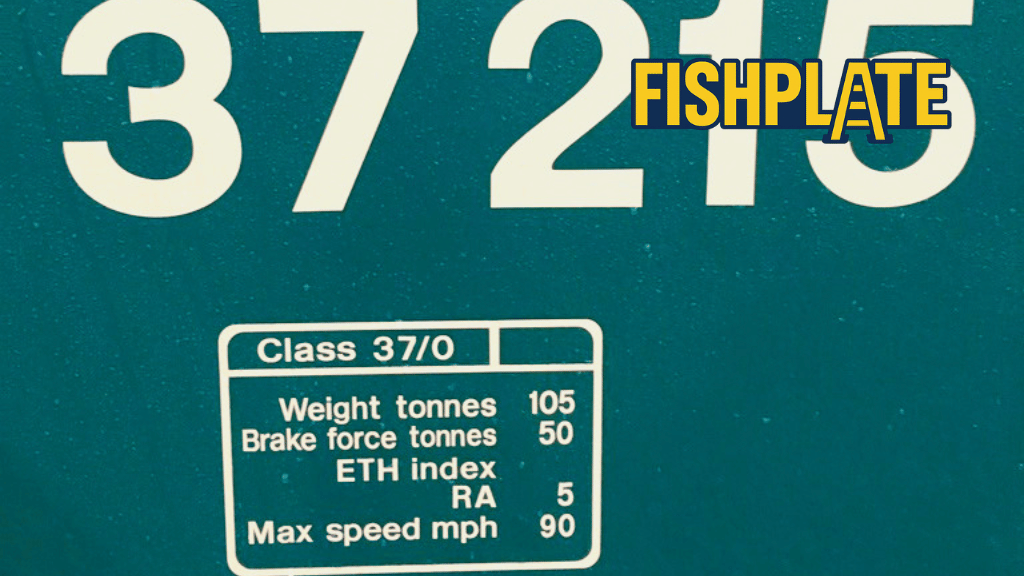
Crucially, its Route Availability 5 (RA5) rating meant it was light enough to travel on almost any part of the British rail network—including fragile rural branch lines that heavier locomotives, like Class 47s or 56s, were strictly banned from. This made it ideal for freight, passenger, parcels, engineering trains, and regional work.
The class is widely known by its nicknames. “Tractor” is the most common, universally linked to the distinctive, chugging sound of the English Electric engine under load. “Growler” is also frequently used by rail enthusiasts, again referring to its iconic engine note.
Main Subclasses
The original locomotives became Class 37/0 under the Total Operations Processing System (TOPS). These were the standard, as-built examples before later refurbishment programmes created more specialised variants.
-
Class 37/3: These were intermediate conversions that received modified bogies and altered gear ratios for freight work, but retained their original engines and electronics.
-
Class 37/4: These locomotives were refurbished specifically for passenger work. A key feature was the installation of Electric Train Heating (ETH), allowing them to power modern coaching stock. They became famously associated with scenic regional passenger services in Scotland, Wales, and the West Country.
-
Class 37/5: Refurbished heavily for freight use, these lost their redundant steam-heating equipment and were modernised for non-passenger duties. They were rebuilt using earlier body shells, identifiable by their original split-headcode boxes.
-
Class 37/7: Heavy freight conversions. Unlike the 37/5s, these were rebuilt from later, flush-nose body shells and were fitted with extra internal ballast weights. Weighing in at 120 tonnes, they were purpose-built for demanding, heavy steel and coal traffic.
-
Class 37/9: A small, experimental sub-class of six locomotives modified in the late 1980s as testbeds for new engines. Four received Mirrlees power units, and two received Ruston engines, bumping their output to 1,800 hp.
Notable Class 37s
Several individual Class 37s stand out as important milestones in the history and preservation of the fleet.
-
D6700 (later 37119 / 37350): The very first locomotive of the class, delivered in November 1960. It has been preserved as part of the National Collection and restored to its original British Railways green livery and original running number, D6700, at the National Railway Museum.
-
37003: Another incredibly early example associated with the dawn of the fleet. It is highly valued in preservation as an example of an original, un-refurbished Class 37/0.
-
37025 “Inverness TMD”: A legendary preserved locomotive with a fierce Scottish heritage. Adorned in the iconic BR "Large Logo" blue livery—complete with the famous Highland stag icons on its flanks—it is an essential reference point for Scottish operations.
-
37403 “Isle of Mull”: A prime example of the passenger-fitted Class 37/4 subclass. It perfectly illustrates how the installation of electric train heating allowed these locomotives to become the backbone of highly celebrated regional passenger routes.
-
37714 “Cardiff Canton”: A classic representative of the heavy-ballasted 37/7 freight subclass, showcasing the later, flush-nosed body style and the rugged adaptations made to extend the operational life of the fleet.
Why the Class 37 Lasted
The Class 37 remained relevant across seven decades because the basic design was incredibly robust and flexible. It could be adapted for almost any role, its route availability was practically unmatched, and successive refurbishment programmes extended its usefulness long after many contemporary early diesel classes had been scrapped.
For enthusiasts, the interest goes far beyond nostalgia. The Class 37 is a living timeline of British rail history, boasting an intricate web of subclasses, liveries, names, regional allocations, and rebuild histories. Understanding these differences makes a sighting meaningful: a Class 37 is rarely just a Class 37. Its number, nose design, subclass, and current working all tell a unique part of a legendary railway story.
Latest Class 37 Videos
- 0Z99 Rescues The Failed Rescue Locomotive 37219, 37250, 37422, 37501, 37512, 37610, 37901
- BR Class 55 'Deltic' Locomotives in Preservation during the Pre Digital Age (BR55 01P) 37220
- TRAINS at LEICESTER Class 810s, 37s, 66s & MORE! Busy Leicester Station. 23/4/26 37501, 37901
- Train Spotting at Doncaster Station 12/6/2026 37418
- A Preview Of What You Can See On This Channel - Railways 37407, 37417
- West Somerset Railway Gala Guests Head Home! | GBRF 66795 To Avonmouth | 37250
- Memories of the ECML in the 1990's 37008
- Earl of Mount Edgcumbe, Skyfall and other trains at Newcastle: plus, 37, 91, Biomass 12 June 2026 37240
- British Rail Class 37s in Scotland (1989) | Inverness to Dingwall Railway Journey | Vintage Trains 37262, 37419, 37420
- British Rail North East 1992-Eaglescliff Freight Action Classes 20, 37, 47, 56, 60 & 143 37104, 37714
- Trains Through Spalding - December 2021 37175, 37424
- Trains at Watford Junction (WCML) 31/07/2025 37116, 37405
- Trains at Peterborough, ECML, 06/05/2026 37607
- Trains At SkeltonJn (York) & York With 5043+37240 On 12th June 2026 37240
- Vintage Trains 5043+37240 At York From Newcastle To Birmingham New Street 37240
- Vintage Trains 5043+37240 At Skelton Jn. (York) From Birmingham New Street To Newcastle 37240
- Colasrail 37254 Leeds DBSO 9708 to Dollands Moor through the platform at Headcorn 12/06/2026. 37254
- ULTRA RARE! Class 99 and Class 69 Action in Scotland! GBRf 99 Test Runs! 37116, 37425
- EPR 37611 & 37423 at Wigan & Preston on a Double Headed Railtour - 19/03/2026 37423, 37611
- Chinnor & Princes Risborough Railway diesel gala, March 2026 37227, 37418
- Buxton Depot in the 1980s 37678, 37688
- BR in the 1980s - Greaves Sidings 37010, 37013
- Coal Trains at Three Spires Junction | Coventry Colliery Branch 1988/1993 37221, 37223
- Trains at Wigan North Western, WCML, 19/03/2026 37423, 37611
- Thrash Two - Diesel Locos Being Noisy - Full Programme 37058, 37059, 37092, 37107, 37128, 37153, 37340, 37351, 37372, 37405, 37410, 37417, 37422, 37797, 37901