- Add missing details (numbers, operators, headcodes) when they aren’t in the video
- Get recognised for contributions with points & badges
- Save favourites and come back to vehicles you’re tracking
All train classes · Diesel traction
Class 43
Summary
- Vehicle entries 241
- Indexed videos 5844
- Stock type Locomotive
- Power source Diesel
- Most indexed vehicle 43062 (275 appearances)
- Builder Brush Traction / Crewe Works
- Built 1975–1982
- Introduced 1976
- Wheel arrangement Bo-Bo
- Top speed 125 mph
Links


| Locomotive number | Video appearances |
|---|---|
|
43002
Sir Kenneth Grange, Sir Kenneth Grange
|
84 |
| 43003 | 50 |
|
43004
Caerphilly Castle, Caerphilly Castle
|
118 |
|
43005
St. Michael's Mount
|
51 |
| 43006 | 25 |
| 43007 43207 | 54 |
| 43008 43208 | 56 |
|
43009
Nunney Castle
|
73 |
|
43010
Lydford Castle
|
71 |
| 43012 | 54 |
|
43013
Nmt, Mark Carne Obe
|
262 |
|
43014
The Railway Observer
|
169 |
| 43015 | 39 |
|
43016
Powderham Castle
|
57 |
| 43017 | 22 |
|
43018
The Red Cross
|
29 |
| 43019 | 7 |
| 43020 | 27 |
| 43021 | 33 |
|
43022
Nether Stowey Castle
|
41 |
|
43023
HST 50
|
25 |
| 43024 | 14 |
|
43025
Exeter, “The Institution Of Railway Operators”
|
135 |
| 43026 | 32 |
|
43027
Acton Castle
|
63 |
| 43028 | 23 |
|
43029
Caldicot Castle
|
63 |
| 43030 | 20 |
| 43031 | 39 |
| 43032 | 70 |
| 43033 | 33 |
| 43034 | 28 |
| 43035 | 26 |
| 43036 | 19 |
| 43037 | 33 |
| 43038 43238 | 9 |
| 43039 43239 | 11 |
|
43040
Berry Pomeroy Castle
|
91 |
|
43041
St Catherine's Castle
|
37 |
|
43042
Tregenna Castle, Tregenna Castle
|
87 |
| 43043 | 61 |
|
43044
Edward Paxman
|
38 |
|
43045
The Doncaster School Ad1450
|
93 |
|
43046
Geoff Drury 1930-1999 Steam Preservation And Computerised Track Recording Pioneer
|
214 |
| 43047 | 151 |
| 43048 | 130 |
|
43049
Neville Hill, Neville Hill
|
185 |
|
43050
Loch Morar
|
118 |
| 43051 43251 | 7 |
| 43052 | 39 |
| 43053 | 21 |
| 43054 | 48 |
| 43055 | 237 |
| 43056 | 27 |
| 43057 43257 | 8 |
|
43058
Loch Eil
|
127 |
|
43059
Loch Shiel
|
171 |
| 43060 43200 | 109 |
|
43061
The Fearless Foxes
|
86 |
|
43062
John Armitt, John Armitt
|
275 |
| 43063 | 23 |
| 43064 | 53 |
| 43065 43465 | 16 |
|
43066
Emt HST
|
65 |
|
43067
Nottinghamshire Fire And Rescue Service BRitish Transport Police Nottingham
43467
|
11 |
| 43068 43468 | 20 |
| 43069 | 11 |
| 43070 | 47 |
| 43071 | 34 |
| 43072 43272 | 14 |
|
43073
Neville Hill HST Depot 42 Years
|
50 |
| 43074 43274 | 9 |
|
43075
East Midlands Trains HST Power Cars
|
73 |
| 43076 | 52 |
|
43077
Safety Task Force
43277
|
6 |
| 43078 | 18 |
| 43079 | 26 |
|
43080
West Hampstead Psb
43480
|
29 |
| 43081 | 64 |
| 43082 | 61 |
| 43083 | 38 |
| 43085 43302 | 9 |
| 43086 | 28 |
| 43087 | 23 |
|
43088
Dartmouth Castle
|
52 |
| 43089 | 108 |
| 43090 43290 | 22 |
| 43091 | 26 |
|
43092
Cromwell's Castle
|
70 |
|
43093
Berkeley Castle, Berkeley Castle
|
193 |
|
43094
St Mawes Castle
|
107 |
| 43095 43295 | 8 |
| 43096 43296 | 8 |
|
43097
Castle Drogo
|
57 |
|
43098
Walton Castle
|
63 |
| 43099 43299 | 13 |
| 43100 43300 | 27 |
|
43102
The Journey Shrinker, The Journey Shrinker 148.5 Mph The Worlds Fastest Diesel Train
43302
|
71 |
| 43103 43303 | 13 |
| 43104 43304 | 16 |
| 43105 43305 | 10 |
| 43106 43306 | 102 |
| 43107 43307 | 8 |
| 43108 43308 | 7 |
| 43109 43309 | 13 |
| 43110 43310 | 7 |
| 43111 43311 | 6 |
| 43112 43312 | 29 |
| 43113 43313 | 7 |
| 43114 43314 | 2 |
| 43115 43315 | 6 |
| 43116 43316 | 5 |
| 43117 43317 | 7 |
|
43118
Celebrating Forty Years
43318
|
5 |
| 43119 43319 | 6 |
| 43120 43320 | 15 |
| 43121 43321 | 16 |
|
43122
Dunster Castle
|
114 |
|
43123
Valenta 1972-2010
43423
|
23 |
| 43124 | 27 |
| 43125 | 24 |
| 43126 | 40 |
| 43127 | 34 |
| 43128 | 19 |
| 43129 | 27 |
| 43130 | 36 |
| 43131 | 26 |
| 43132 | 34 |
| 43133 | 30 |
|
43134
Gordon Aikman Bem
|
27 |
| 43135 | 31 |
| 43136 | 23 |
| 43137 | 27 |
| 43138 | 36 |
| 43139 | 31 |
| 43140 | 16 |
| 43141 | 36 |
| 43142 | 32 |
| 43143 | 31 |
| 43144 | 35 |
| 43145 | 29 |
| 43146 | 40 |
| 43147 | 31 |
| 43148 | 43 |
| 43149 | 43 |
| 43150 | 45 |
| 43151 | 33 |
| 43152 | 35 |
| 43153 | 57 |
|
43154
Compton Castle, Compton Castle
|
76 |
|
43155
Rougemont Castle
|
59 |
|
43156
Maen Castle
|
88 |
| 43157 43357 | 7 |
|
43158
Kingswear Castle
|
39 |
|
43159
Rio Warrior
|
208 |
|
43160
Castle-An-Dinas
|
43 |
| 43161 | 25 |
| 43162 | 61 |
| 43163 | 48 |
| 43164 | 37 |
|
43165
Prince Michael Of Kent
|
23 |
|
43166
HST 40 Celebrating 40 Years Of High Speed Train Services On The Crosscountry Network
43366
|
16 |
| 43167 43367 | 8 |
| 43168 | 22 |
| 43169 | 24 |
|
43170
Chepstow Castle
|
41 |
|
43171
Raglan Castle
|
36 |
|
43172
Harry Patch, Tiverton Castle
|
84 |
| 43174 | 24 |
| 43175 | 23 |
| 43176 | 21 |
| 43177 | 23 |
| 43178 43378 | 5 |
| 43179 | 30 |
| 43180 | 15 |
| 43181 | 28 |
| 43182 | 35 |
| 43183 | 30 |
|
43184
Laira Diesel Depot
43384
|
78 |
|
43185
Great Western
|
67 |
|
43186
Taunton Castle, Taunton Castle
|
100 |
|
43187
Cardiff Castle, Cardiff Castle / Y Cymro The Welshman
|
89 |
|
43188
Newport Castle, Newport Castle / Y Cymro The Welshman / Geraint Thomas
|
101 |
|
43189
Launceston Castle, Launceston Castle
|
71 |
| 43190 | 29 |
| 43191 | 23 |
|
43192
Trematon Castle
|
59 |
| 43193 | 27 |
|
43194
Okehampton Castle
|
68 |
| 43195 | 18 |
| 43196 | 37 |
| 43197 | 20 |
|
43198
Driver Stan Martin 25 June 1950 - 6 November 2004., Driver BRian Cooper 15 June 1947 - 5 October 1999
|
119 |
| 43200 | 67 |
| 43207 | 120 |
|
43208
Lincolnshire Echo
|
106 |
| 43238 | 77 |
| 43239 | 115 |
| 43251 | 169 |
| 43257 | 221 |
| 43272 | 235 |
|
43274
Spirit Of Sunderland
|
272 |
|
43277
Safety Task Force
|
169 |
| 43285 | 129 |
|
43290
Mtu Fascination Of Power
|
197 |
| 43295 | 58 |
| 43296 | 54 |
| 43299 | 113 |
|
43300
Craigentinny
|
111 |
| 43301 | 221 |
|
43302
World Speed Record- HST
|
61 |
| 43303 | 262 |
| 43304 | 112 |
| 43305 | 63 |
| 43306 | 63 |
| 43307 | 81 |
|
43308
Highland Cheiftain
|
55 |
| 43309 | 81 |
| 43310 | 57 |
| 43311 | 47 |
| 43312 | 53 |
| 43313 | 50 |
| 43314 | 54 |
| 43315 | 51 |
| 43316 | 75 |
| 43317 | 64 |
| 43318 | 52 |
| 43319 | 44 |
| 43320 | 68 |
| 43321 | 131 |
| 43357 | 215 |
| 43366 | 110 |
|
43367
Deltic 50
|
69 |
| 43378 | 112 |
| 43384 | 43 |
|
43423
Valenta 1972 - 2010
|
158 |
| 43465 | 150 |
| 43467 | 143 |
| 43468 | 263 |
| 43480 | 215 |
|
43484
Peter Fox
|
163 |
Learn about the Class 43
British Rail Class 43 (HST) power car
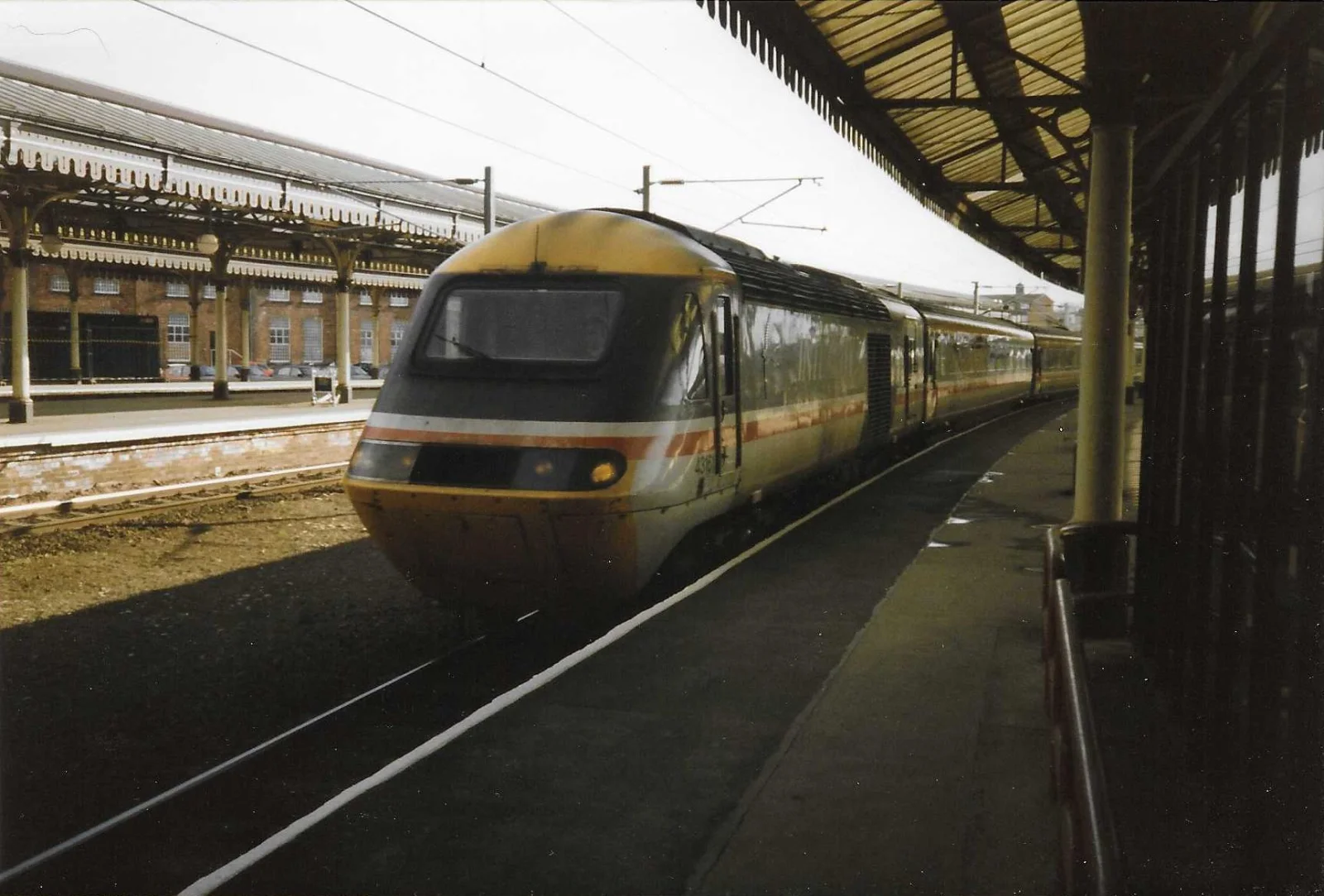
The British Rail Class 43 is the diesel-electric power car built for the High Speed Train (HST), widely branded by British Rail as the InterCity 125. For many passengers it became synonymous with modern long-distance rail travel in Britain: fast, frequent, and comfortable, with a distinctive streamlined nose at each end of a rake of Mark 3 coaches. In railway terms, the Class 43 is unusual because it is not a single locomotive hauling loose-coupled coaches in the traditional way. Instead, HSTs were designed as semi-fixed sets with two power cars, one at each end, working in multiple to propel and control the train from either cab. This arrangement delivered performance and resilience: if one power car was unavailable, the set could sometimes be rescued or moved more easily than a conventional locomotive-hauled train, and the power was distributed at both ends for stable high-speed running.
When the HST entered service in the second half of the 1970s, the aim was blunt and practical: provide 125 mph inter-city running on key main lines without waiting for full electrification. Britain’s rail network had sections capable of higher speeds, but in many corridors the traction and rolling stock of the time were the limiting factors. British Rail’s answer was a train that could do the job with diesel power while offering a passenger environment comparable with the best of the era. The Class 43 power car, paired with the Mark 3 coach, was a central part of that system. The result was one of the most successful high-speed diesel trains in the world, notable not only for speed but for longevity: the type remained in front-line passenger service for decades, long after many contemporaries had been withdrawn, and later shared Britain's inter-city spotlight with electric stock such as the Class 91.
What a Class 43 is (and what it isn’t)
Calling a Class 43 a “locomotive” is common in everyday railway conversation, but technically it is a power car designed to operate as part of an HST set. Each power car contains its own prime mover (diesel engine), generator/alternator, traction equipment, cab, and auxiliary systems. In a standard formation, the driver controls the leading power car while the trailing power car responds through multiple-working control circuits, so both units contribute power. Because there is a cab at each end of the train, the set can reverse direction without turning, which suited intensive inter-city diagrams where terminal turnarounds matter.
The HST concept also meant the power cars were tailored to a specific job: sustained high-speed running over long distances with relatively few stops, hauling coaches designed for stability and passenger comfort at speed. The train was engineered as a package. The Class 43 provides traction and key support functions; the coaches provide capacity and the passenger environment. That integrated approach is one reason the HST aged well: operators could refurbish coaches and update power cars while retaining the core platform.
Origins: the push for 125 mph without wires
In the early 1970s, British Rail was looking for a way to improve inter-city journey times and reliability on major routes that were not electrified, or not yet electrified. Electrification brings excellent acceleration and high sustained speeds, but it requires large capital investment and long lead times. A diesel-powered high-speed train could be introduced sooner, and it could operate across multiple routes without the constraints of electrification boundaries.
The HST programme built on earlier experimentation with high-speed diesel traction and on the recognition that track improvements alone would not deliver a competitive inter-city product unless trains were built to exploit them. Crucially, British Rail also needed a train that could be maintained in large numbers and run intensively, not a fragile prototype. The Class 43 was therefore conceived with production and operation in mind: enough power to reach and hold 125 mph where infrastructure allowed, and robust enough to deliver daily service rather than occasional headline runs.
Design and construction: shaped by purpose
The Class 43’s exterior is defined by its cab end: a streamlined nose designed to reduce aerodynamic drag and improve stability at speed. Its shape also helped reduce wind noise and the pressure effects that can become noticeable at higher speeds, especially when passing other trains or entering tunnels. Behind the nose, the body is functional and boxy, housing the engine room, cooling equipment, electrical gear, and auxiliary machinery. The underframe and bogies were designed for stable high-speed riding and to work with the braking and suspension characteristics of the Mark 3 coaches.
Inside, the power car is a working machine. The engine space is arranged to allow inspection, servicing, and component replacement with minimal disruption. Maintenance practicality was central to the HST’s success: an inter-city fleet lives or dies by availability. A train that is theoretically fast but often stopped in depot is not a flagship for long.
The driving cab layout evolved over time, but the essentials remain: a commanding view forward, controls set up for long-distance running, and equipment to support route knowledge, signalling, and train protection systems. As regulations and safety systems developed, power cars were modified to carry additional equipment, which is a recurring theme in the class’s story: the basic platform remained the same, but the details moved with the era.
Traction: diesel-electric power and multiple working
Class 43 power cars are diesel-electric. The diesel engine drives an alternator, producing electrical power for traction motors. Those traction motors drive the wheels through gearing. This arrangement offers controllable power delivery and strong performance, especially useful for getting a heavy inter-city train up to speed and keeping it there. In HST operation, two power cars work together, effectively combining their outputs. The multiple-working system allows the leading cab to control both power cars so they behave as one train.
Over the class’s life, the engines fitted to Class 43 power cars changed through refurbishment and re-engining programmes. The best-known early engine type is the Paxman Valenta, which became associated with the sound and character of early HST operation. Later, various units received different engines such as the Paxman VP185, and many were eventually re-engined with MTU units in programmes aimed at improved reliability, reduced emissions, and better fuel efficiency. These changes did not alter the fundamental concept of the class, but they do mean that “a Class 43” in late service could differ internally from one in early service, even if the outward appearance remained broadly similar.
The traction equipment and control systems also evolved. Railways are living systems: standards change, parts availability changes, and operators seek better performance and lower costs. A key reason the HST endured is that it was suitable for upgrading. Rather than scrap the whole platform when one component became dated, operators could invest in new engines, updated electronics, and revised auxiliary systems to keep the fleet useful.
Speed and capability: more than a headline number
The HST’s 125 mph maximum speed is often treated as the headline, but operational success depends on more than peak speed. The HST delivered improvements through a combination of sustained high running, good acceleration for its era, and timetable resilience. It could maintain fast timings over long distances without the performance fade that can affect underpowered trains. The riding qualities of the coaches and the stability of the whole formation meant that speed did not translate into discomfort. In practice, the HST became a train that could keep time, which is a different achievement from simply being fast.
The two-power-car configuration also helped in demanding conditions. Distributed power and redundancy can offer practical benefits: the train is less dependent on a single machine, and performance is more consistent when hauling a full rake of coaches. While failures still occurred, the HST’s reputation for reliability was strong enough that it became the default answer on routes that needed dependable inter-city performance without electrification.
The Mark 3 partnership: why the HST felt modern
The Class 43’s history is inseparable from the Mark 3 coach. Passengers experienced the HST not as a power car but as a whole train: quiet, stable, and comfortable. Mark 3 coaches were designed for high-speed running with suspension and construction standards that were ahead of much of British Rail’s older fleet. This combination meant the HST offered a coherent inter-city product rather than a patchwork of improvements.
This matters because it explains the class’s long life. The Mark 3 platform was robust enough to accept repeated refurbishments: new seating, new interiors, updated toilets, improved passenger information systems, and changes to meet accessibility expectations. As the coaches evolved, the power cars could be modernised to match. The HST therefore became less like a fixed 1970s design and more like a platform that could be renewed.
Service entry and early years: a rapid impact
When HST sets entered traffic, the impact was immediate. Journey times fell on major routes, and the trains quickly developed a reputation for being a step change in inter-city travel. British Rail marketed the service strongly, and the HST became associated with a modern image: high speed, high frequency, and a consistent standard of comfort. It was also a practical success. The trains could be diagrammed intensively, and depots could be equipped to support them as a fleet rather than as a small experimental group.
In these years the Class 43 power car was a working tool, but it was also a symbol. A long-nosed power car in InterCity colours became one of the most recognisable shapes on the network. This public recognition sometimes leads to sentimental writing; for a factual page, it is enough to note that the HST became a major part of British Rail’s inter-city strategy and carried very large volumes of long-distance passengers.
Expansion across the network: where Class 43s worked
HSTs were deployed wherever the business case made sense: long-distance flows, routes with suitable infrastructure, and corridors where journey time improvements would attract passengers. Over time, HST operations spread across multiple regions and routes. They became particularly well known on the Great Western and East Coast corridors, but they were also used on cross-country services and other long-distance work where their performance and capacity matched demand.
The ability to operate over non-electrified routes also made the HST useful as network priorities shifted. If one corridor was being upgraded or electrified, HST sets could be redeployed. This flexibility helped the Class 43 remain relevant. It was not tied to a single niche; it could be moved to wherever fast diesel inter-city capacity was required.
Privatisation and the operator era: changing names, same job
Following the privatisation of Britain’s rail passenger services, HST fleets were inherited by successor operators. Over the years, Class 43 power cars worked for multiple franchises and brands. Liveries changed, interior standards changed, and refurbishment programmes reflected the priorities of different operators. The underlying role, however, stayed familiar: provide fast, high-capacity express services on routes where the HST remained suitable and where replacements were not yet available.
This period saw significant investment in some parts of the fleet. The logic was commercial: if a train will be used for another decade, refurbishment can be cheaper than replacement. Operators updated seating, installed or improved air-conditioning and passenger amenities, and carried out heavy overhauls on power cars to sustain reliability. Re-engining programmes fit into this pattern: investing in new prime movers could reduce the cost of running the fleet and help meet environmental requirements.
Shorter formations and late-career adaptation
One of the most striking features of the HST’s late career was its ability to adapt to different service patterns. In some regions, HSTs were reconfigured into shorter formations to match demand, platform length, and timetable requirements. Shortened sets retained the two power cars but ran with fewer coaches, creating a high-quality express train for routes that did not require the capacity of a full-length inter-city set.
This adaptation shows the difference between a train that is merely old and a train that is still useful. The Class 43 platform allowed operators to tailor formations without abandoning the core strengths: speed, ride quality, and a familiar maintenance base. For passengers, these shortened HSTs often felt like an upgrade compared with older regional stock, even late in the type’s life.
At the same time, the HST’s widespread use began to narrow as newer train fleets arrived. Replacement was not uniform. Some routes received new trains earlier; others relied on HSTs longer. The Class 43 therefore entered a patchwork retirement, with some fleets withdrawn while others continued in service or moved into secondary roles.
Engineering and specialist roles: beyond passenger work
As front-line passenger work declined, some Class 43 power cars found new employment in engineering and measurement duties. High-speed stability and proven traction equipment can be valuable for infrastructure monitoring trains. In these roles, the job is not to carry passengers but to carry equipment and staff while running at speeds that allow efficient network coverage. It is a practical afterlife that suits a design built for sustained high-speed running.
The precise nature of these roles varies by operator and programme, but the general principle remains: a reliable, fast power car can still be useful even when it is no longer the right answer for mass passenger service.
Maintenance and overhaul: why the class lasted
Longevity in railway service is seldom an accident. The Class 43 lasted because it was supported by maintenance regimes, supply chains, and heavy overhaul capability. Depots built expertise around the fleet, and operators had strong incentives to keep the trains available: they were central to long-distance service delivery. Overhauls included structural attention, traction system maintenance, engine work, and the many smaller jobs that keep a high-speed diesel fleet dependable.
Re-engining programmes deserve special mention because they represent a strategic decision: rather than accept declining reliability or rising emissions costs, operators invested heavily in making the class more modern under the skin. This is a classic railway trade-off. New trains bring modern features, but they also bring procurement risk, training needs, and early-life issues. A thoroughly understood platform, upgraded intelligently, can remain competitive longer than expected.
Safety and regulation: evolving requirements
Across its long service life, the Class 43 operated through changing safety expectations and regulatory frameworks. Train protection systems developed and expanded, and vehicles were modified accordingly. Crashworthiness, fire safety, and passenger accessibility also became more prominent in rolling stock policy. While the Mark 3 structure had a reputation for robustness, the HST as a whole still had to evolve to remain compliant and acceptable for continued operation.
Major incidents involving HSTs were investigated in detail and influenced safety thinking. For a factual class history, the key point is not to list tragedies for effect but to recognise that a fleet operating intensively for decades will be part of the broader history of railway safety and technical change. The HST’s survival into later eras required that it could be updated and that its operating context could support it.
Withdrawal and legacy: a gradual end
The Class 43’s withdrawal from mainstream passenger service happened unevenly. Some operators replaced HSTs with new diesel or bi-mode multiple units; others retained them until late because they remained cost-effective and popular. Fleet cascades, electrification schemes, and new train deliveries all played roles. In many cases, the HST continued because it was still the best available tool for the timetable and the route.
Today, the class’s legacy is primarily technical and operational rather than emotional. The Class 43 demonstrated that a high-speed diesel train could deliver reliable inter-city service at scale. It set expectations for journey times and comfort on routes that were not electrified. It also showed the value of designing a train as a system: power cars, coaches, and maintenance strategy built together.
In preservation and heritage operation, a number of power cars and complete sets have been retained. Preservation is a separate story from operational history, but it confirms the class’s importance: organisations do not take on the expense and complexity of keeping high-speed diesel traction alive unless the type has real historical weight. Even so, the essential record of the Class 43 is not nostalgia. It is a practical history of a machine and a system that worked—adapted repeatedly, carried millions of passengers, and remained relevant for far longer than its designers could reasonably have expected.
Summary
The British Rail Class 43 power car was created to deliver 125 mph inter-city travel quickly and reliably on a network that could not be electrified overnight. Working in pairs at either end of an HST set, Class 43s provided the traction, control, and support systems that made the InterCity 125 a long-lived success. Over time the class evolved through refurbishment, re-engining, and adaptation to new service patterns, moving from flagship inter-city work to regional and specialist roles. Its long career was a product of sound engineering, maintainable design, and an ability to be updated rather than replaced wholesale. The Class 43’s history is therefore best understood not as a romance but as an operational achievement: a high-speed diesel platform that proved durable, flexible, and effective across multiple eras of Britain’s railway.